
PSEUDO TOOK DOWNTOWN
NEW YORK LIVE
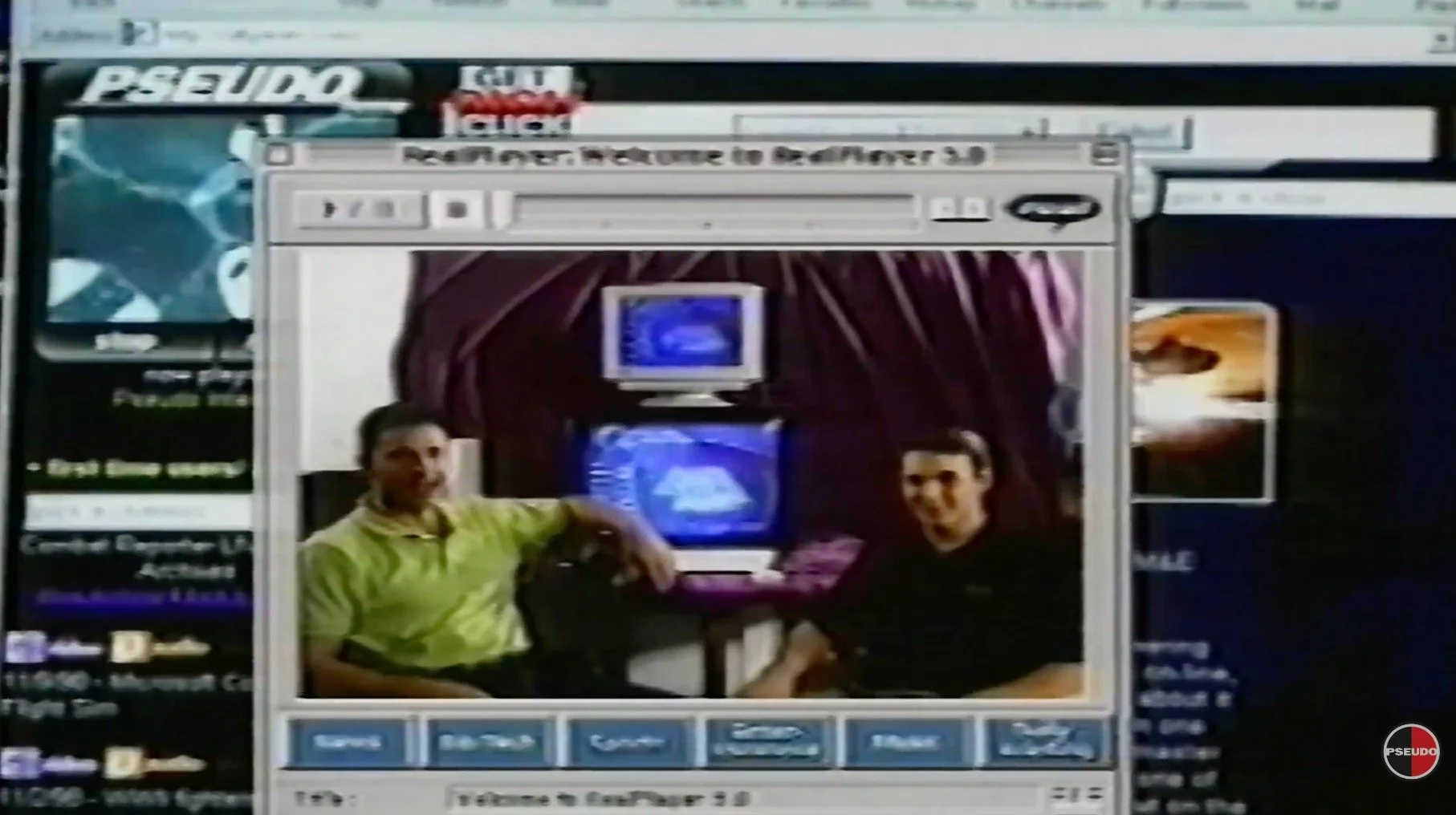
One night in March 1999, I was sitting in front of a computer with DJ Evil Dee next to me. We were monitoring a chat room, replying to messages from users watching what was unfolding around us: a loose confederation of rappers, producers, DJs, artists, and downtown scenesters—along with a couple of hosts—drinking and talking shit in a SoHo studio, all of it streamed to anyone with internet access.
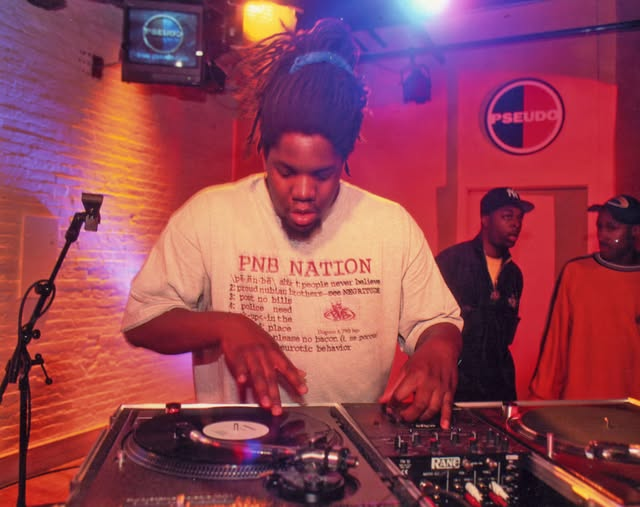
dj evil dee plays 88hiphop’s channel on pseudo. Photo courtesy of Josh Harris.
The chat room, #koolout on Internet Relay Chat, or IRC, was named for one of the many channels owned by Pseudo, the dot-com-era startup that was renting the space at 600 Broadway and financing the art project-cum-business operating inside. As we blasted music and fucked with each other and the audience, users with handles written in mixed caps offered their own commentary. One went by a variation of Buckshot, a name lifted from the rapper in Evil Dee’s group, Black Moon.
“What would the real Buckshot do if he knew someone was using his name?” someone in the studio asked.
“He’d find out where he lived, go to his door, and fuck him up,” Evil Dee replied.
The stream continued.
Janice Erlbaum wasn’t at Pseudo that night, but she remembers those times. “That was a product of geography,” said Erlbaum, a former executive producer and host with the company. “That was a product of the parties. People would hear about the parties, and they would show up, and they would be, like, ‘Oh, I want to attach myself to this place.’”
But before Pseudo streamed a single second of video, it was a radio show focused on downtown Manhattan. “Any culture we could suck up, we got in there,” said Josh Harris, who founded Pseudo in 1994. Harris was already flush with cash from Jupiter Communications, the internet consulting and research company he started from his apartment in 1986. “I was arguably the leading qualitative analyst for the internet,” Harris said. “I could tell the future.”
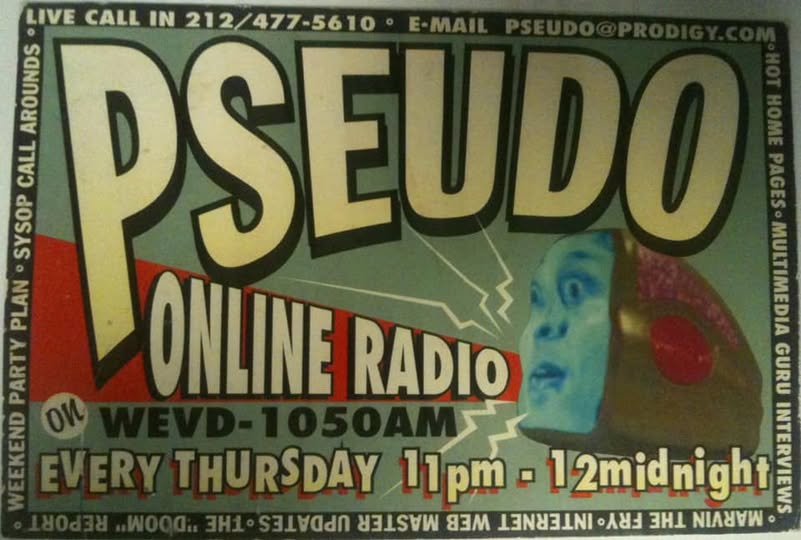
a flyer for pseudo online radio. courtesy of josh harris.
After episodes of his show aired, Harris would upload the audio to the web. But he aspired to more than a listenership on a fledgling platform. Harris wanted to turn it into a TV series, Erlbaum said. To that end, he shot a pilot consisting of “a bunch of people doing really short, weird performances as he walked around making comments.”
Around that time, Harris began hosting parties at his loft. While the turnout was initially sparse, the nights foreshadowed what Pseudo would become.
“Josh was very into having, like, interactive areas of parties, and places for people to do art, or places for people to chat in the Prodigy chat rooms,” which Harris had won a contract to run for the early internet service provider, Erlbaum said. “One room would be hooked up with all these sex chat rooms, and you could just go into the room and, you know, join it. Or they’d be playing, like, early games on the local area network and whatnot.”
As Pseudo grew, it absorbed sex and gaming into its programming, alongside technology, music, sports, film, and experimental content. At its peak, it was broadcasting from the studio at all hours of the day, with shows ranging from DJ sets to psychic readings to erotica to Harris performing as a clown named Luvvy. “My game was to do that—to produce the last great art in New York City,” Harris said. He raised $16 million, including money of his own, to bolster production.
“Everybody who wandered through, Josh would be like, ‘I don’t know—give him a show. Do something with him,’” Erlbaum said. “And so we just had all these weird niche-interest shows.”
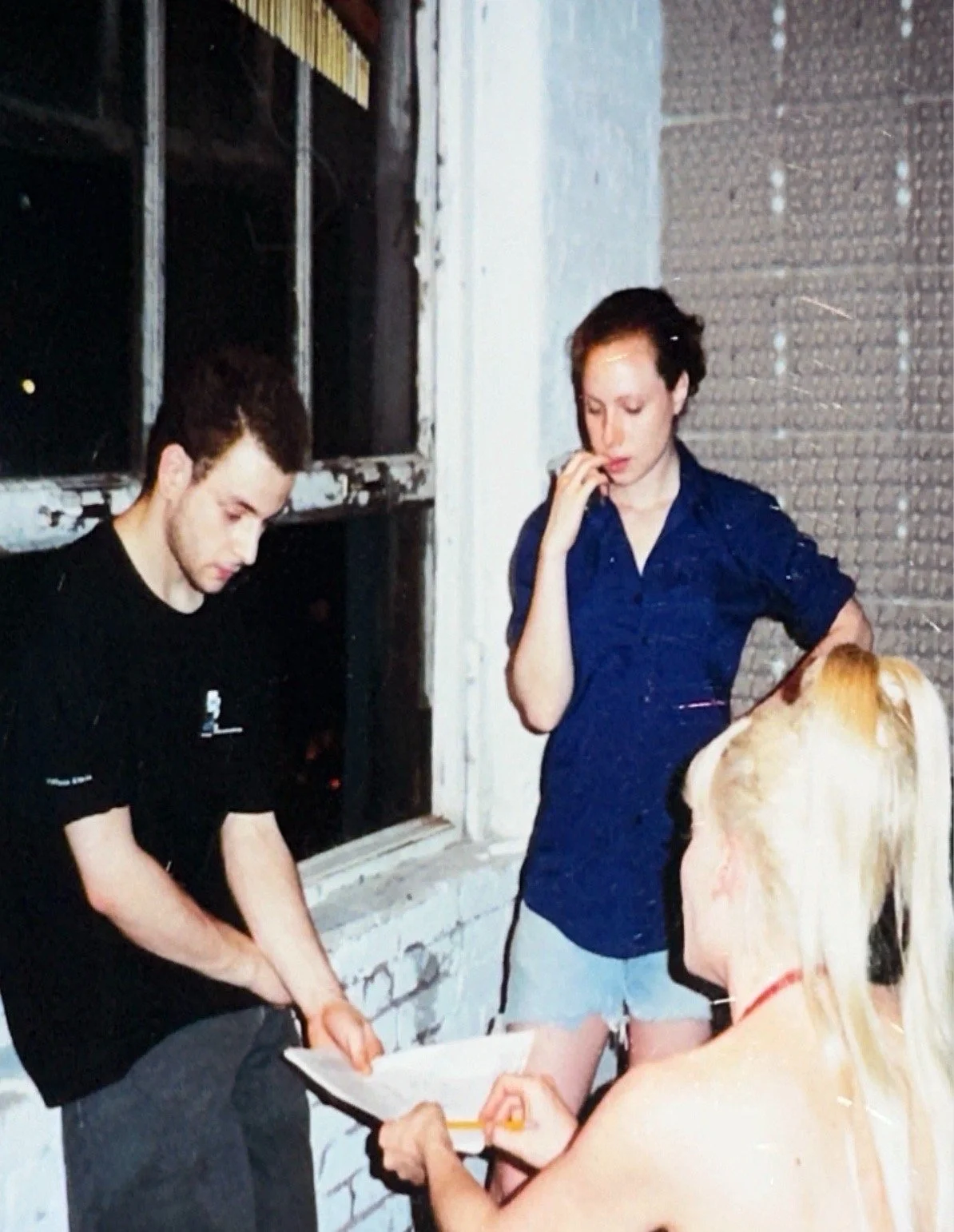
Dan Melamid, Janice Erlbaum, one of Kid Creole's Coconuts, who had her own show. Photo courtesy of janice erlbaum.
Those shows drew audiences of the chronically online when only a fraction of Americans had internet access, most of them via dial-up modems and none of them on 5G-enabled smartphones. They tapped into subcultures that, until then, existed online as specialty pages and forums. Suddenly, any bored 20-something with a computer, an internet connection, and an encyclopedic knowledge of backpack rap could battle a signed MC for a global viewership that would praise or shit on him in real time.
There’s little trace of Pseudo and its shows on the internet today. By 2000, the Silicon Alley streamer had collapsed, and its programming had disappeared. But if you watched those episodes now—a host speaking directly to a camera, special guests, unfiltered exchanges with a chat—they’d look a lot like your average Kick or Twitch stream from a creator with a following in the millions.
“That’s what he was trying to do,” Erlbaum said of Harris. “The idea is so good that the worst businesspeople in the world had to actively, actively wreck it.”
Britney on the Pseudo rooftop for Cherrybomb
Source: YouTube/@pseudodotcom
It took months of convincing for Skat, a host and producer, to visit Pseudo for the first time. Skat was producing a radio show for CBGB that the venue decided to put on the internet. To do that, it brought in Dan Melamid, the creator of Koolout, who invited Skat to the Pseudo office. While Skat expected to see “a bunch of guys doing technical stuff,” she found a “full-on TV broadcast studio,” she said. Inside, and on stream, were four teenage girls playing with Tamagotchi toys.
“I was just like, wow, that is the fucking coolest thing I’ve ever seen,” Skat said.
Skat was sold. “I was like, ‘Dude, I want to work here. Get me a job,’” she said. “And [Dan] was like, ‘OK.’”
As Koolout built its programming schedule and boosted its audience, Skat helped organize a weekly Koolout party in CBGB’s basement, tying the online experience—something that might have been hard to explain to your average clubgoer—to a physical event. Skat also began to bring her own interests and connections into Pseudo’s programming, starting with skateboarding.
Although Skat didn’t skate herself, she was connected to the New York scene, and an informal pitch became Empire Skate, likely the first skateboarding show on the internet. Every Thursday night, Skat and co-host Jeff Pang would bring in locals like Harold Hunter, Keith Hufnagel, and Ryan Hickey to spend an hour addressing an online audience that probably seemed imaginary to professional skateboarders who didn’t spend their days in front of computers.
Empire Skate intro
Source: YouTube/@pseudodotcom
The skaters also weren’t used to the kids who bought boards talking shit to them directly, hidden behind usernames. But the internet was still anonymous in 1998, so although tensions ran high, the stakes were low, if nonexistent. And so the disputes played out across shows and platforms, occasionally metastasizing into heated phone calls and threats before evaporating.
“There’s heaps of beef,” Skat said. “It was just, like, really loose, but really fun.”
My own beef came with a Pseudo staffer, over a girl named Kima from Baltimore. I soon learned that Kima was actually Arnelle. She’d named herself for Kima Raynor, a member of Total.
As Pseudo’s programming expanded, the need for some kind of organizing principle behind it became clear. That started with segmenting content according to theme—a move that had begun with 88HipHop, which established an autonomous channel when it partnered with Pseudo in 1996.
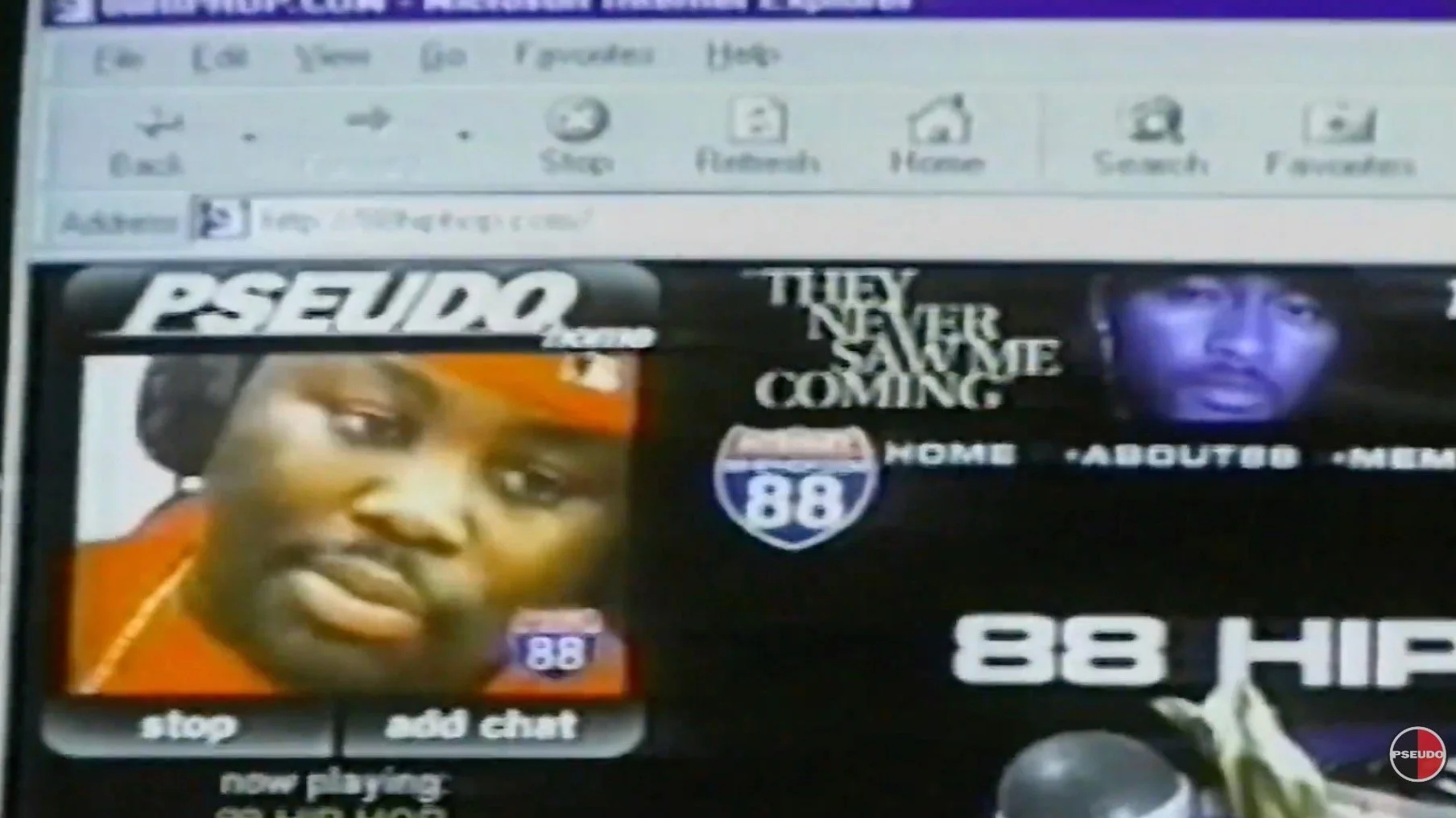
88Hiphop, the first autonomous pseudo channel
“We started the channel model for Pseudo, and then they saw how it was working with us, and then they said, ‘OK, cool. We’ll do other channels,’” said Randy Nkonoki-Ward, who co-founded 88HipHop.
It was Erlbaum who carried that approach across the company. “We decided that we were going to group everybody into the best kind of category that we could come up with, because not everything fit with everything else,” she said. Illumination Gallery, a show about B-movies, had zero in common with series about business and tech, or skateboarding, or sex.
“There was a show about poetry,” Erlbaum said. “There was a show about the SoHo art scene. It's like, what do any of these things have to do with each other? Nothing. And that’s why channels evolved. Because it was like, this has to make sense.”
Decades later, digital media would recast this idea as “verticalized content.”
Hilary Cato sees Pseudo as a beta test for the commercial internet—a hefty “investment in figuring out what people would pay money for.” The answer was clear: music, news, games, sex. “So I created a lifestyle show,” the former host and producer said. “I started out with a lifestyle show that was full of sexy behavior.”
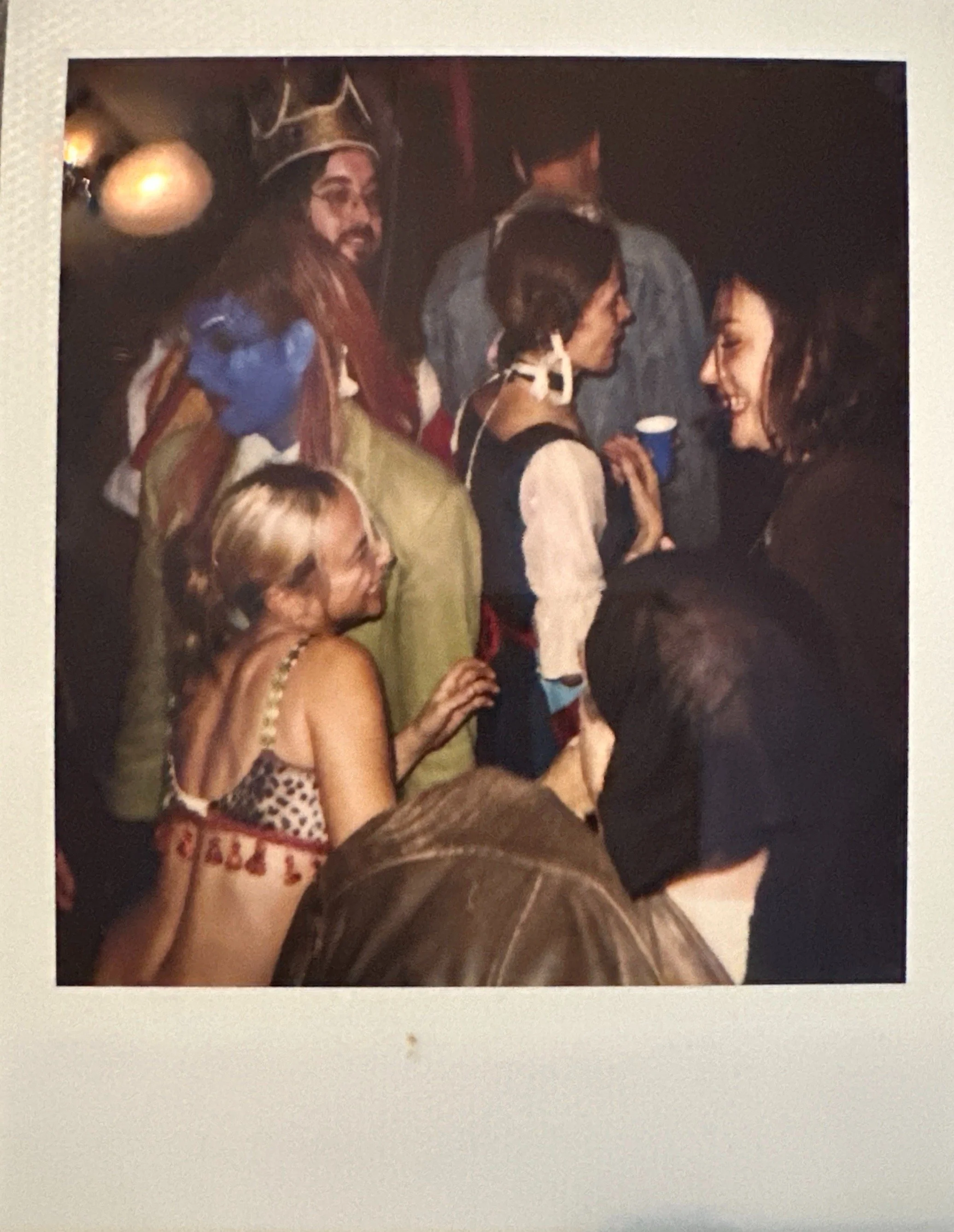
HILARY CATO (FAR LEFT) AND OTHERS AT A PARTY. PHOTO COURTESY OF Janice erlbaum
That show, Bread & Butter, sat somewhere between garden-variety lifestyle content and porn. “I became everybody’s sexy friend who was gonna get guys on the show to take their shirts off,” to match the volume of breasts seen on camera. That opened the door for Risky Advisor, a sex advice show. “You could find a porn site,” Cato said, “or you could find me, and my purpose was to be like a sex goddess who is going to love you back.”
Launching a channel at Pseudo meant completing a 17-page brief that justified its existence, but Cato debuted her shows without a specific viewership in mind. “At that time, the audience, as I knew it, were web developers from, like, AT&T and Canon and all the big companies that were doing the hardware and infrastructure,” Cato said. “And they were mostly men.” Cato would take viewers out of their comfort zones through conversation or bring in basically whatever guests she wanted to. “I had such a free ticket.”
Pseudo was always loose, but by the fall of 1999, its programming felt fluid, with schedules dissolving and shows growing more impromptu. I was starting college and, at Skat’s insistence, calling in to have a psychic tell my fortune on air in the middle of a weekday afternoon.
All Games Network ident
Source: YouTube/@pseudodotcom
Y2K was nearing, and Josh Harris, Pseudo’s founder, had been forced out as CEO—a condition of raising more capital for the company, he said. His first replacement, Larry Lux, who came from National Geographic Interactive, reportedly left after clashing with Harris, who’d stayed on as chairman. At the same time, Pseudo was flirting with partners like the NFL, space.com, and politics.com. “It went mainstream as the market changed,” Harris said.
Regardless, Harris was about to stream his entire life in what, in retrospect, seems like a culmination of the previous half-decade. The moment would be chronicled in We Live in Public, a feature-length documentary that showed the company and Harris himself unraveling.
“Things did kind of get frenetic toward the end,” Skat said. “And, you know, I think Josh was kind of falling apart.”
“He was a really, really troubled guy,” Erlbaum said. “He was very destructive, and he really, really enjoyed pitting people against each other and making everybody scramble.”
For his part, Harris always likened Pseudo to an art project, and compares the tension between personalities to the dynamics of a movie set. “I think that’s what Janice is sort of talking about,” he said. “Because the result of the programming is the artistic freedom.”

OUTSIDE PSEUDO STUDIOS, AT THE CORNER OF BROADWAY AND HOUSTON. PHOTO COURTESY OF JOSH HARRIS.
Cato was let go before the new year; Skat decamped for New Zealand, where she streamed remotely until Pseudo finally shut its doors in 2000. Erlbaum had already left—“for, ironically, the people who had perfected what Pseudo wanted to do, and they used it for porn,” she said. Harris’s ultimate vision included “a bunch of little studios so that everybody could run their own program.” But Pseudo filed for bankruptcy amid the dot-com meltdown, before that could happen.
In 2001, INTV, a New York internet company, bought Pseudo’s assets for $2 million—a fraction of the money Harris and his investors pumped into it. Its current footprint includes a YouTube channel populated by archival videos, many of them MTV News-style reports (a protest at New York’s city hall, a Baby Phat fashion show) produced after the sale, and a site last updated seven years ago.
Whatever else remains of Pseudo’s catalog is scattered, if it exists at all. Years ago, Harris sent Skat audio from Empire Skate—he didn’t have the video himself. “It took me years to listen, to even fucking turn it on,” Skat said. “And then, when I did, I was like, actually, that’s pretty good.”
Harris lives in Las Vegas, where, by his own account, he’s “on ice.” Erlbaum compares his management style to “a kid “trying to ram his Matchbox cars into each other hard enough that they would meld and become one car, and they wouldn’t. But he was just smashing us against each other to try and make it happen.”
All the while, tens of millions of dollars were pouring out of the company. Erlbaum wishes she hadn’t fought the inevitable.
“I’ll kick myself in retrospect,” Erlbaum said, “because I’d be like, ‘We can’t throw any more parties.’ It’s like, shut up, shut up, shut up. Enjoy the party. Stop what? What are you doing?”
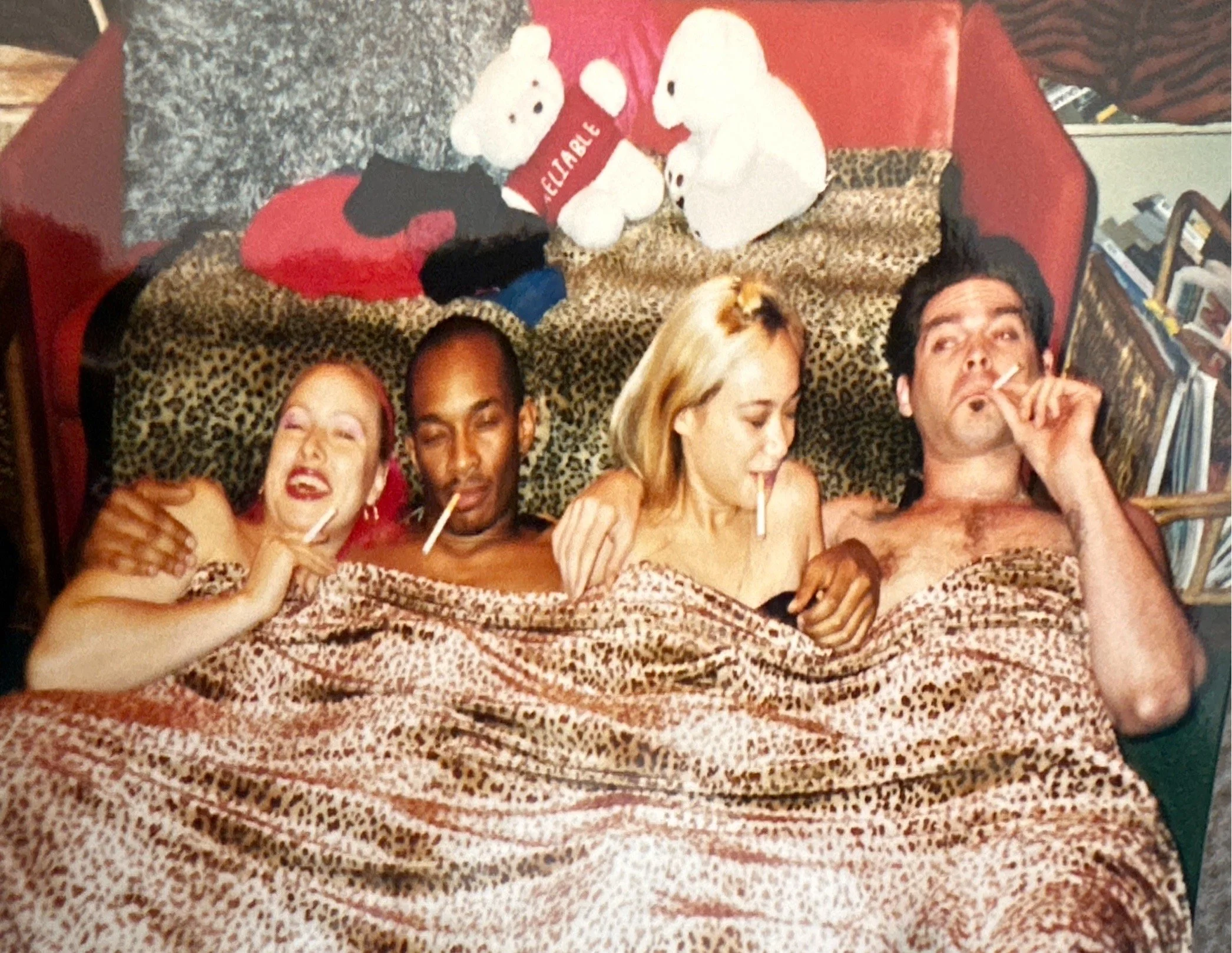
Promo shoot in Grrowl office. Janice ERLBAUM, Randy Nkonoki-Ward, Hilary CATO, AND “a guy named Dylan.”
WRITER: LUCAS WISENTHAL
ARCHIVAL IMAGES: JANICE ERLBAUM, JOSH HARRIS
